
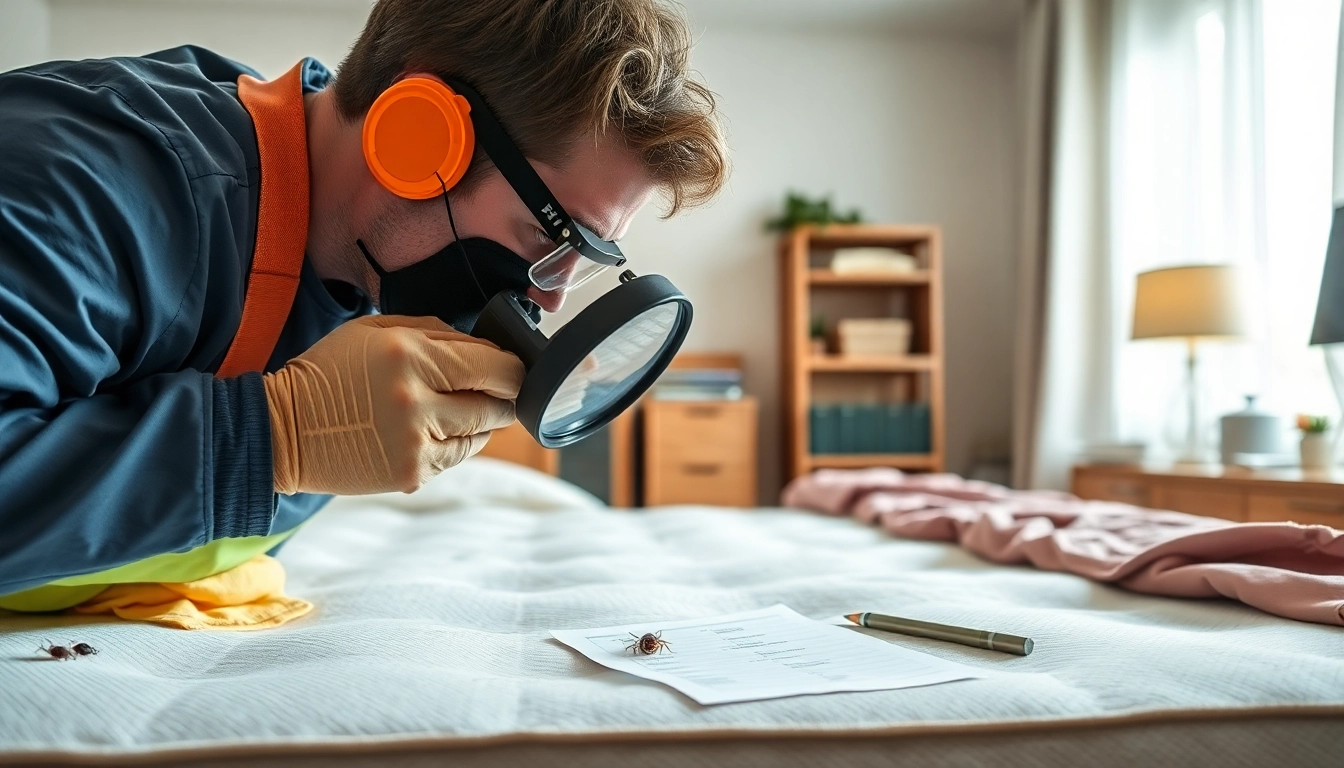
Understanding Bed Bugs and Their Impact
What are Bed Bugs?
Bed bugs are small, parasitic insects that feed on the blood of humans and animals. They belong to the Cimicidae family and can be found in various settings, from homes to hotels and public transportation. Adult bed bugs are approximately 5 to 7 mm long, have a reddish-brown color and a flat, oval shape, which allows them to easily hide in cracks and crevices. They are nocturnal creatures, becoming active mostly at night to feed, which can lead to significant distress for anyone affected by an infestation. Understanding the basic biology and behavior of bed bugs is crucial for effective bed bug control.
Signs of Bed Bug Infestation
Identifying a bed bug infestation early is vital for effective management. Common signs include:
- Blood Stains: Tiny blood spots on linens or mattresses, resulting from bed bugs that feed on humans at night.
- Fecal Spots: Dark, speckled marks on sheets or walls indicate the presence of bed bugs.
- Molted Skins: Bed bugs shed their exoskeletons as they grow, which can often be found in hiding spots.
- Live Bugs: Spotting live bed bugs, especially in the seams of mattresses or cushions, is a clear indication of an infestation.
The Psychology of Bed Bug Anxiety
The presence of bed bugs can lead to significant psychological distress, often manifesting as anxiety, insomnia, and fear of re-infestation. Many affected individuals develop a heightened sense of vigilance and may find it challenging to relax in their own homes. This anxiety stems not only from the physical discomfort caused by bites but also from the social stigma associated with infestations. Understanding this psychological impact is crucial for addressing the needs of those affected and tailoring effective bed bug control strategies.
Comprehensive Bed Bug Control Approaches
Integrated Pest Management (IPM) Explained
Integrated Pest Management (IPM) is a holistic approach to pest control that emphasizes the use of multiple strategies to manage pest populations effectively. This method combines non-chemical and chemical strategies for sustained pest management and involves the following steps:
- Monitoring: Regular inspections and monitoring tools can help detect bed bug presence early.
- Prevention: Addressing environmental conditions that favor bed bug infestations, such as clutter, can reduce their ability to thrive.
- Control Techniques: Utilizing a combination of physical (heat treatment) and chemical methods ensures a comprehensive approach.
- Education: Teaching individuals about prevention and control practices is essential for long-term success.
Non-Chemical Bed Bug Control Solutions
Non-chemical methods are effective and environmentally friendly options for managing bed bugs. Key strategies include:
- Heat Treatment: Raising the temperature of a room to above 120°F kills bed bugs and their eggs.
- Vacuuming: Regular vacuuming can remove live bugs and eggs from surfaces.
- Steam Cleaning: Using steam cleaners on bedding and furniture can effectively kill bed bugs on contact.
- Encasements: Sealing mattresses and box springs in protective covers can trap any existing bed bugs, preventing them from feeding.
When to Call a Professional for Bed Bug Control
While some individuals may attempt to tackle bed bugs independently, significant infestations often require professional intervention. It’s advisable to seek professional help when:
- The infestation is extensive, with observable bites or blood spots in multiple areas.
- DIY methods have failed after multiple attempts.
- The psychological impact of the infestation is overwhelming, causing significant distress.
Professional exterminators have access to more potent treatments and can implement complex strategies effectively.
DIY Bed Bug Control Techniques
Effective Home Remedies for Bed Bugs
For those looking to manage minor infestations on their own, several home remedies may be effective:
- Diatomaceous Earth: This natural powder can be sprinkled in infested areas to dehydrate and kill bed bugs upon contact.
- Rubbing Alcohol: Spraying a diluted solution can kill bed bugs on contact.
- Essential Oils: Some oils, such as tea tree and lavender, can repel or kill bed bugs when mixed with water and sprayed.
Common Mistakes During Bed Bug Control
Understanding common mistakes can help prevent worsening an infestation:
- Ignoring Clutter: A cluttered environment provides hiding spots for bed bugs.
- Failing to Inspect: Not checking luggage or secondhand items before bringing them into the home.
- Inconsistent Treatment: Applying treatments intermittently instead of consistently following a control plan.
Tools and Products for DIY Bed Bug Control
Using the right tools and products can enhance the effectiveness of DIY methods:
- High-Temperature Steamers: These can effectively kill bed bugs and their eggs on contact.
- Bed Bug Traps: These can be used to monitor and assess bed bug activity.
- Mattress Encasements: Providing protection to prevent existing infestations from spreading.
Preventing Future Bed Bug Infestations
Protective Measures for Your Home
To prevent future infestations, consider the following protective measures:
- Regular Inspections: Check your home regularly, focusing on high-risk areas such as bedrooms and living rooms.
- Travel Precautions: When traveling, inspect hotel rooms for signs of bed bugs and keep luggage elevated.
- Education: Teach household members about how to spot the signs of bed bugs and implement preventive actions.
Regular Inspection and Maintenance
Conduct regular inspections of bedding, mattresses, and upholstered furniture. Using bed bug monitors can also provide early warnings of an infestation. Regular maintenance ensures that any potential problems are addressed before they escalate into full-blown infestations.
Educating Household Members on Bed Bug Control
Awareness plays a critical role in prevention. Educating all members of the household about bed bugs—how they spread, signs of infestation, and prevention techniques—can create a more vigilant home environment. Regular discussions and updates on the best practices can empower everyone in the household to help maintain a pest-free environment.
FAQs about Bed Bug Control
How quickly can bed bugs infest a home?
Bed bugs can infest a home quickly, sometimes within a few weeks. They reproduce rapidly, with females laying up to 500 eggs during their lifetime, leading to exponential growth if left untreated.
What are the best home remedies for bed bugs?
Effective home remedies include diatomaceous earth, steam cleaning, and essential oils like tea tree and lavender. Vacuuming regularly and using mattress encasements also help.
How much does professional bed bug control cost?
The cost of professional bed bug control varies widely based on the extent of the infestation and region but typically ranges from $300 to $1,500, depending on treatment methods and the area being treated.
Can bed bugs be completely eradicated?
Yes, bed bugs can be completely eradicated with diligent control measures and proper treatment methods. However, vigilance and preventive measures are crucial to avoid re-infestation.
How long does bed bug control typically take?
The timeline for bed bug control can vary, but successful treatments generally take at least 2 to 4 weeks, with some requiring multiple visits for effective elimination.