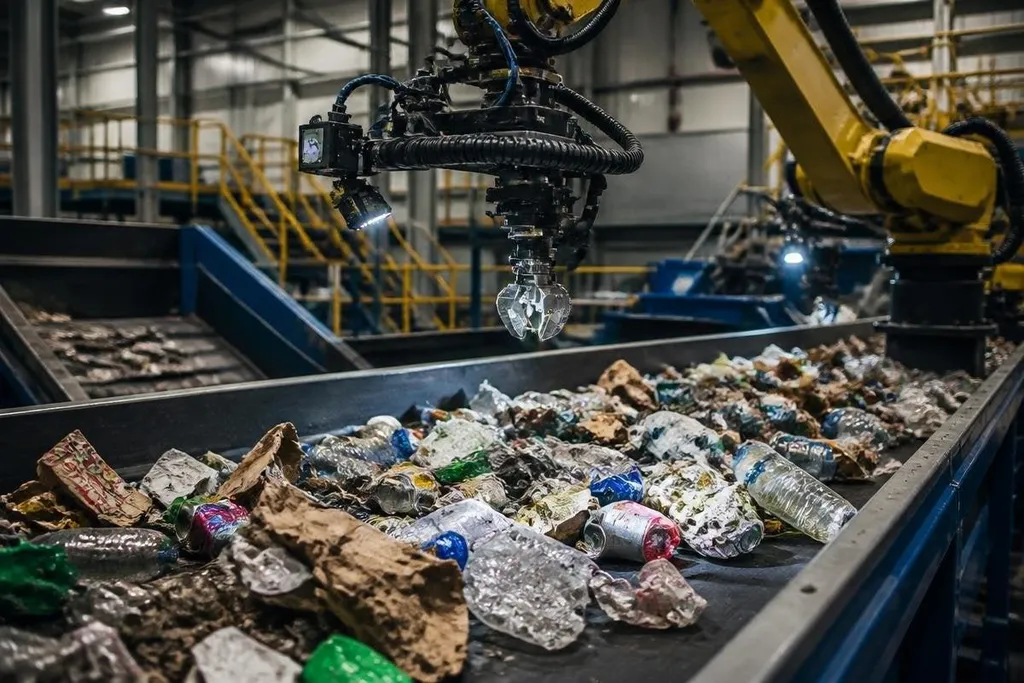
A recycling robot can spot bottles, cans, cardboard, and some types of plastic as items move along a conveyor. The hard part starts when waste is dirty, crushed, covered, or made from materials the system has not learned to identify.
For a recycling plant manager, the choice comes down to cleaner sorting against the cost of sensors, software, maintenance, and human checks.
- Cleaner sorting: Cameras and near-infrared sensors can separate items by shape, color, and material.
- Safer work: Robots can take over some repetitive picking tasks near moving belts.
- Main limit: A robot can only sort what its sensors can see and its software can classify.
How the robots sort waste
Most recycling robots work beside a conveyor. Cameras inspect each item, software assigns a material type, and a robotic arm removes the target item with a gripper.
Air jets may also push light items into a separate chute. Machine vision means software that reads images from cameras. Near-infrared sensors use reflected light to help tell materials apart, even when two items look similar to the human eye. The system then sends a timing signal so the arm reaches the item as it passes.
That timing matters. A slow arm may miss the item, while a fast arm can damage it or grab a nearby object. The robot also needs a steady flow of waste, since piles of overlapping items block the view from above.
Where automation helps
The clearest gain comes from repeated picking. The system can make the same reach and release motion for hours, while a person may need to work beside dust, noise, sharp edges, and moving equipment.
A plant can also use a robot to recover a specific material from a stream that already has a known mix. For example, the system may remove plastic containers from a belt after larger cardboard pieces have been separated. Narrow tasks are easier to check than a promise to sort every item in household waste.
The data can help too. A sorting system records what it sees and what it removes, giving plant staff a way to check changes in the waste stream. That record may point to a new source of contamination or a drop in the recovery of one material.
A sorting result can change when dirty film or loose plastic reaches the gripper. Recycling robotics reporting from Robot24.com can tie that result to the robot, material mix, site, and test date before the next section looks at where the machines fail.
Where the robots fail
Dirty waste causes trouble because food, liquid, and labels change the surface that the sensors read. A clear plastic container may look different after it is crushed, stained, or mixed with paper.
Shape creates another problem. A robot may identify a soft plastic film, but its gripper can struggle to pick it from a moving belt. Small pieces can also fall between items, while flat material may stick to the conveyor or fold over another object.
Material labels are not always enough. Two items can share a color but need different recycling routes. A black plastic tray, a dark bottle, and a piece of rubber may look close in an image while behaving differently in later processing.
The plant still needs people to watch the line, clear jams, inspect rejects, and handle items the robot cannot pick. This setup removes some work. It doesn't remove the need for process control.
The cost beyond the robot
The purchase price is only one part of the decision. The plant may need a new conveyor layout, protective covers, sensor cleaning, software updates, spare grippers, and staff training.
Material changes can add more work. If the plant accepts a new type of packaging, its system may need new training data and a fresh test period. A robot tuned for one stream may produce poor results after the contents change.
I'd buy a recycling robot only when the plant can define one narrow sorting job and measure the result against human picking.
A practical buying check
Use this list before choosing a system:
- Name the stream: record the materials, item sizes, moisture, dust, and overlap on the belt.
- Set the target: decide whether the plant needs higher recovery, fewer rejects, or safer manual work.
- Test dirty items: include crushed, stained, torn, and partly hidden objects in the trial.
- Check the handoff: measure what happens after picking, including where rejected items go.
- Price the support: add sensors, grippers, cleaning, training, software, and replacement parts.
- Keep a manual route: plan how people will deal with jams and items outside the model's training.
The best fit is a stable waste stream with a clear target and enough space for staff to inspect the results. Mixed household waste remains a harder job because the robot must identify damaged materials while they move, overlap, and change from one load to the next.