
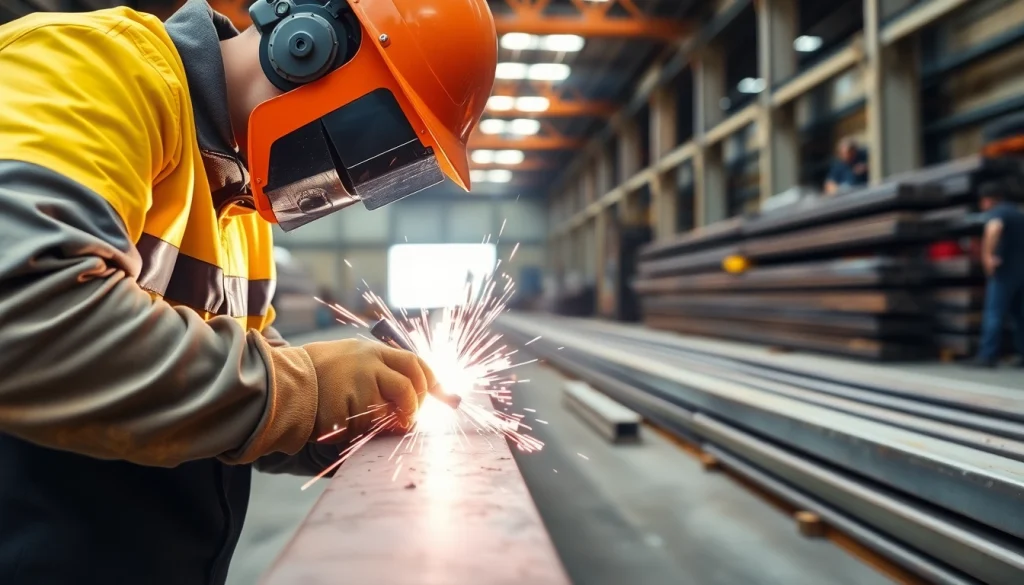
Introduction to Structural Steel Welding
Welding has played a pivotal role in modern construction, especially when it comes to structural steel welding. This technical process involves joining steel components to create robust structures that are essential for buildings, bridges, and other infrastructures. With a variety of techniques available, the industry has seen significant evolution, leading to improved methods, safety, and effectiveness in structural applications.
What is Structural Steel Welding?
Structural steel welding is the process of joining metal parts to create and reinforce structures. This technical procedure involves various welding techniques, which form connections between structural elements such as beams and columns. The significant attributes of structural steel include its high strength-to-weight ratio, flexibility, and resistance to various environmental challenges, making it a preferred material in construction.
The Importance of Structural Steel in Construction
Structural steel is far more than just a supportive framework; it is crucial for the integrity and longevity of buildings and infrastructure. This material’s versatility allows it to accommodate various architectural styles and satisfy functional requirements. Moreover, it is integral to implementing sustainable construction practices, facilitating recycled usage without compromising quality. Consequently, the role of welding becomes indispensable, ensuring that these elements meet stringent safety standards while also adapting to complex designs.
Overview of Popular Welding Techniques
Within the realm of structural steel welding, several techniques have gained prominence. Each method has its own application strengths, weaknesses, and suitability depending on project specifications:
- Manual Metal Arc Welding (MMAW/SMAW): Ideal for site conditions, offering robust welds.
- Gas Metal Arc Welding (GMAW): Known for its speed and flexibility in thin material welding.
- Flux-Cored Arc Welding (FCAW): Excellent for outdoor operations due to its self-shielding capabilities.
Common Methods of Structural Steel Welding
Manual Arc Welding (SMAW)
Manual Metal Arc Welding, commonly referred to as Shielded Metal Arc Welding (SMAW), is one of the oldest and most widely utilized welding techniques. Its manual nature allows welders to adapt to various conditions effectively, making it a staple in structural applications.
Although it requires skill and experience, SMAW is favored for its versatility and ability to produce strong, high-quality welds on various materials, including rusted or dirty steel. In many cases, it serves as a go-to welding method on construction sites where the conditions are less than ideal.
Gas Metal Arc Welding (GMAW)
Gas Metal Arc Welding (GMAW), or MIG welding, has gained popularity due to its efficiency and speed. This automated process utilizes a continuous wire feed as an electrode and an inert gas to shield the weld pool from atmospheric contamination. GMAW produces clean and smooth welds, reducing the need for extensive cleanup.
It is predominantly used in the fabrication of metal products, especially in scenarios where the structural steel components are pre-fabricated in controlled environments. Thus, the GMAW process enhances productivity while ensuring consistent quality.
Flux-Cored Arc Welding (FCAW)
Flux-Cored Arc Welding (FCAW) is akin to GMAW but employs a tubular wire filled with flux that generates shielding gas upon heating. This method allows for high deposition rates and deep penetration, making it suitable for thicker materials.
FCAW’s adaptability allows it to be employed both indoors and outdoors, giving it a unique advantage in various weather conditions. It delivers robust welds perfect for structural steel applications like bridges or heavy machinery constructions where strength is critical.
Applications of Structural Steel Welding
Building Construction
In building construction, structural steel welding is essential for creating frameworks that support the overall structure. This process ensures that the connections among beams, columns, and girders are seamless and structurally sound.
Moreover, efficient welding practices have led to faster construction times. With advancements like pre-fabrication of structural components, buildings can be erected in less time, which holds significant financial advantages.
Bridges and Infrastructure
Welding is a cornerstone in the construction of bridges and large-scale infrastructure projects. Structural steel provides the necessary strength to support loads while allowing for aerodynamic designs that withstand environmental forces.
Innovative welding techniques enhance the durability of these structures, addressing factors like fatigue and corrosion that can compromise integrity over time. Effective implementation of structural steel welding ensures safer, more resilient public infrastructure.
Manufacturing and Fabrication
In the manufacturing sector, structural welding is invaluable for fabricating parts and assemblies for diverse applications. It permits the customization of products to meet specific engineering demands while maintaining high quality and strength.
From manufacturing equipment to bespoke structures, the precision of welding ensures that fabrications are both functional and safe, crucial for industries spanning aerospace, automotive, and energy.
Quality Control in Structural Steel Welding
Standards and Certifications
Quality control in welding practices must comply with rigorous industry standards and certifications. Organizations like the American Welding Society (AWS) set forth codes such as the AWS D1.1 – Structural Welding Code for steel, providing guidelines that ensure safety and structural integrity.
Certification programs for welders also ensure that professionals possess the necessary skill set to perform quality welds. Adhering to established standards mitigates risks associated with poor workmanship and defects.
Common Defects and How to Avoid Them
Despite the best practices, certain defects can arise during welding. Common issues include:
- Porosity: Tiny gas pockets can form in welds if proper shielding isn’t maintained.
- Undercutting: This occurs when the weld metal doesn’t adequately fill the joint, weakening the structure.
- Inclusions: Foreign particles trapped in the weld can compromise integrity.
To avoid these defects, quality inspections and thorough training in proper techniques are critical. Continuous monitoring and collaborating with qualified inspectors can prevent many welding issues from arising.
Testing Methods for Weld Integrity
Implementing rigorous testing methods is crucial for ensuring weld integrity. Common testing techniques include:
- Visual Inspection: A frontline method for assessing surface conditions.
- Ultrasonic Testing (UT): Uses high-frequency sound waves to detect internal flaws.
- X-ray or Gamma Ray Inspection: Provides detailed images of welds to identify defects.
These testing methods empower organizations to maintain stringent quality control and ensure the safety of structures depending on their welded joints.
Career Opportunities in Structural Steel Welding
Skills Required for Structural Welders
To thrive in the field of structural steel welding, individuals must possess a mix of technical and soft skills. Essential abilities include:
- Proficiency in various welding techniques and equipment.
- Attention to detail to ensure precision in weld quality.
- Problem-solving abilities to address challenges on-site.
- Physical stamina and dexterity for performing demanding tasks.
Job Prospects and Growth in the Field
The demand for skilled welders continues to rise, driven primarily by expanding construction and infrastructure projects across the United States. As older professionals retire, the demand for a new generation of welders grows at a pace outstripping supply, providing solid job security and growth opportunities.
Moreover, advancements in technology and materials are leading to unique positions within the field, broadening the scope of career pathways. From structural welders to welding engineers, the opportunities are diverse.
Training and Certifications Available
Various training programs and courses are available for aspiring structural welders. Technical schools, community colleges, and apprenticeship programs offer education in welding principles, safety practices, and hands-on experience.
Additionally, various certification options are available through organizations like AWS, enhancing professional credibility and job prospects. Engaging in continuous education and specialization can also provide an edge over competitors in this industry.